

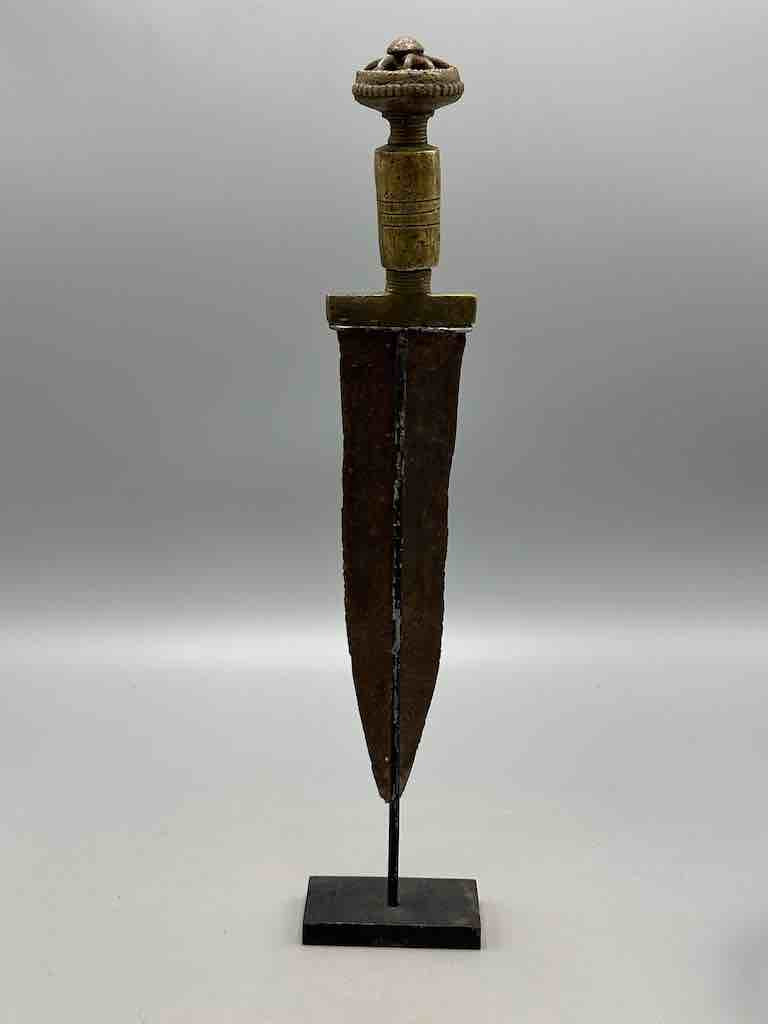
Ceremonial Knife with Brass Handle — Akan / Ashanti Culture, West Africa
This very old - late 19th to early 20th century - very used knife was used for Baule tribal ceremonial purposes, in Ivory Coast, probably in ritual sacrifices of chickens, offerings to the gods to beseech them for better health and improvements of all kinds in every aspect of the villagers' lives.
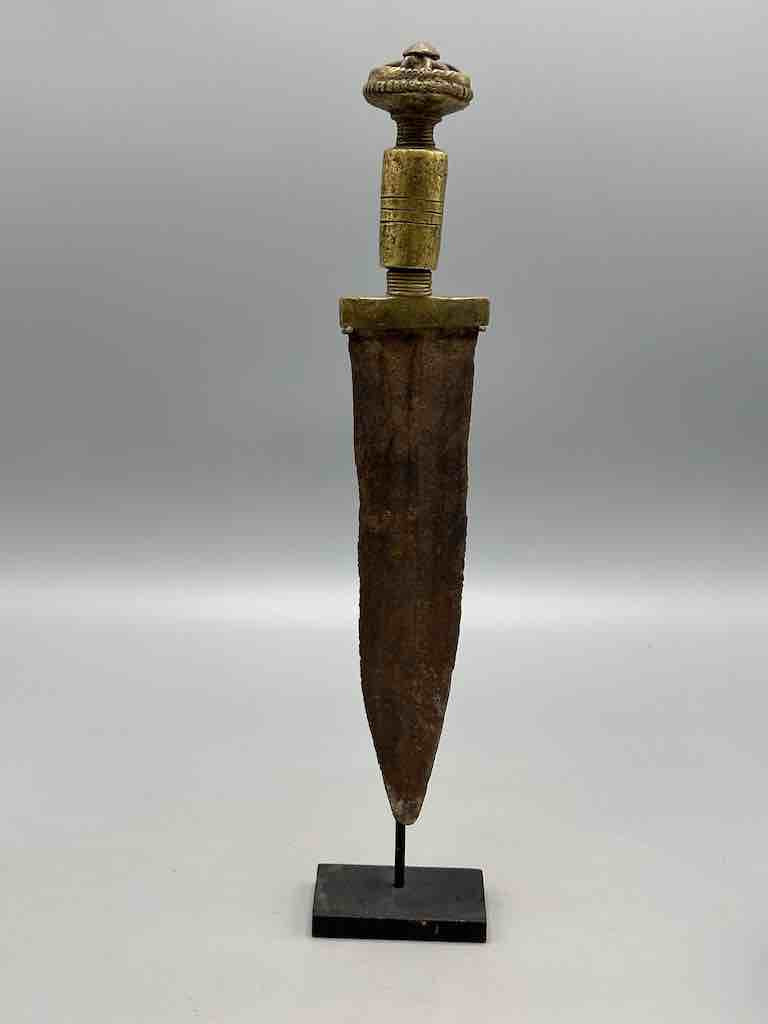
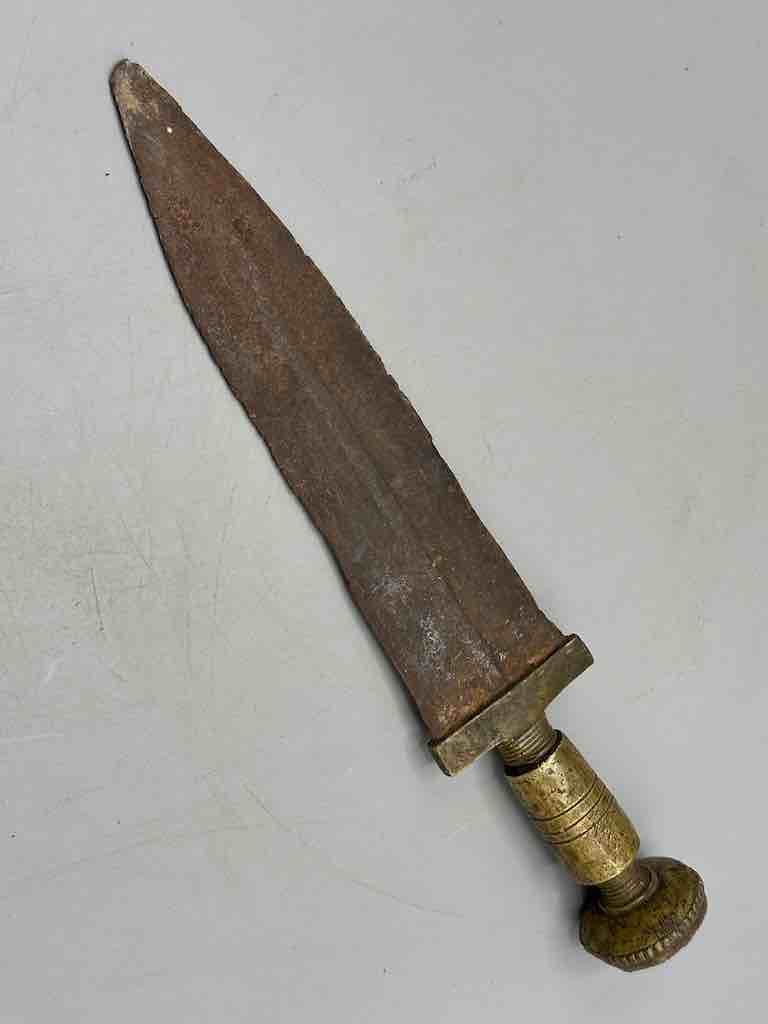
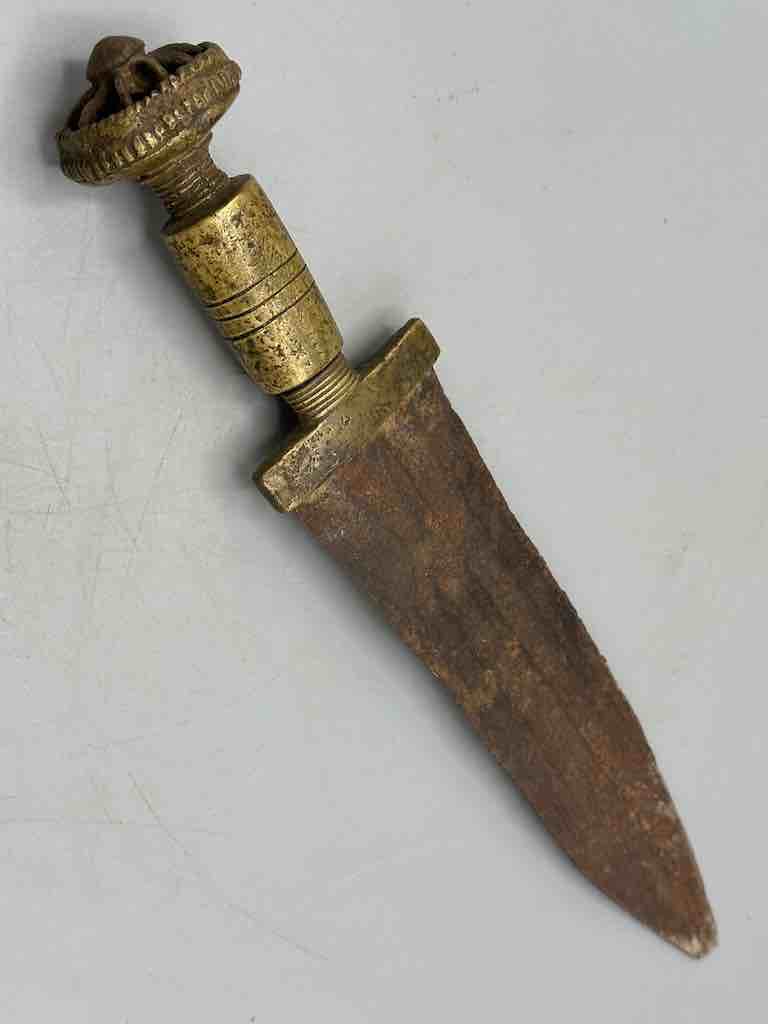
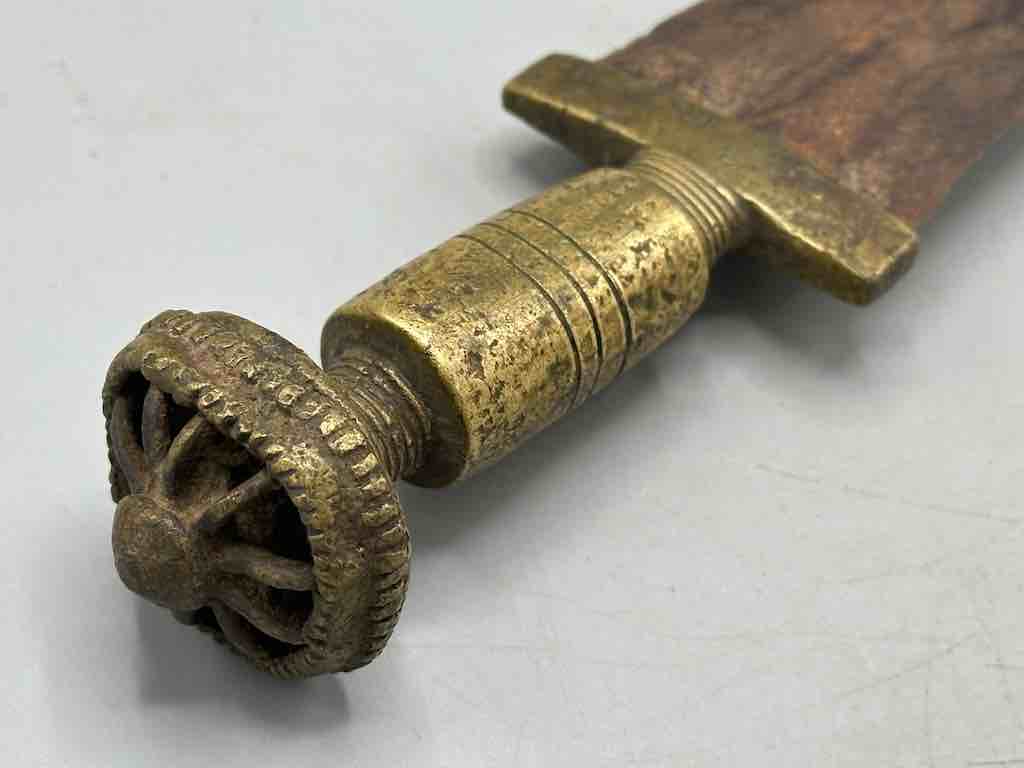
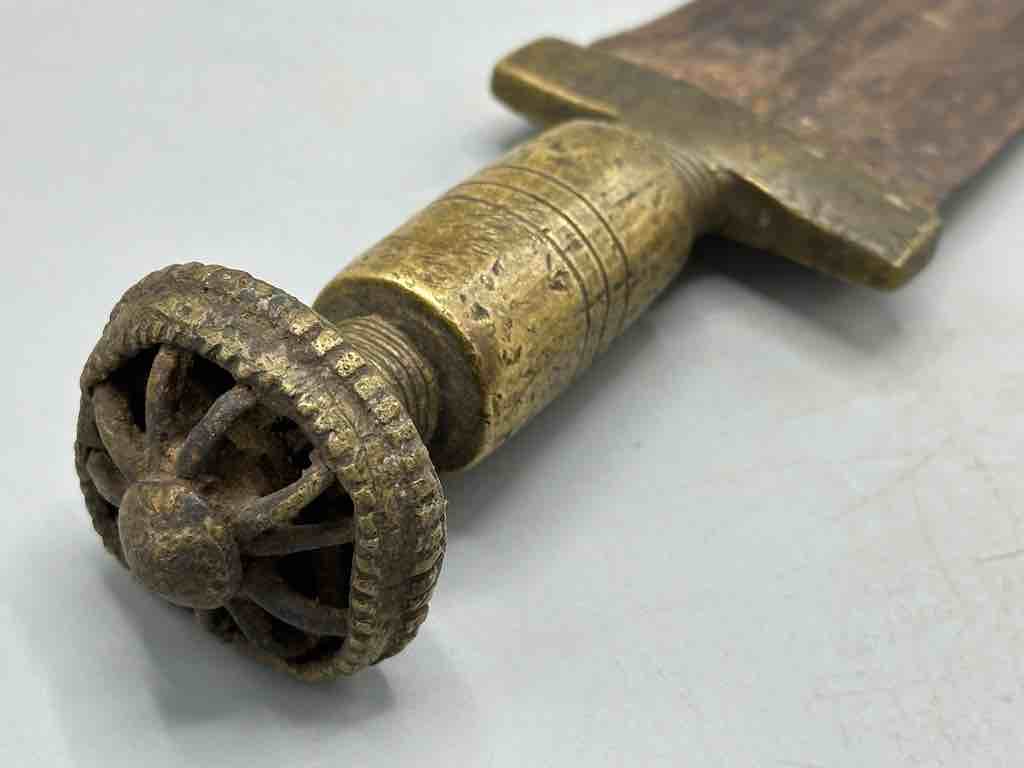
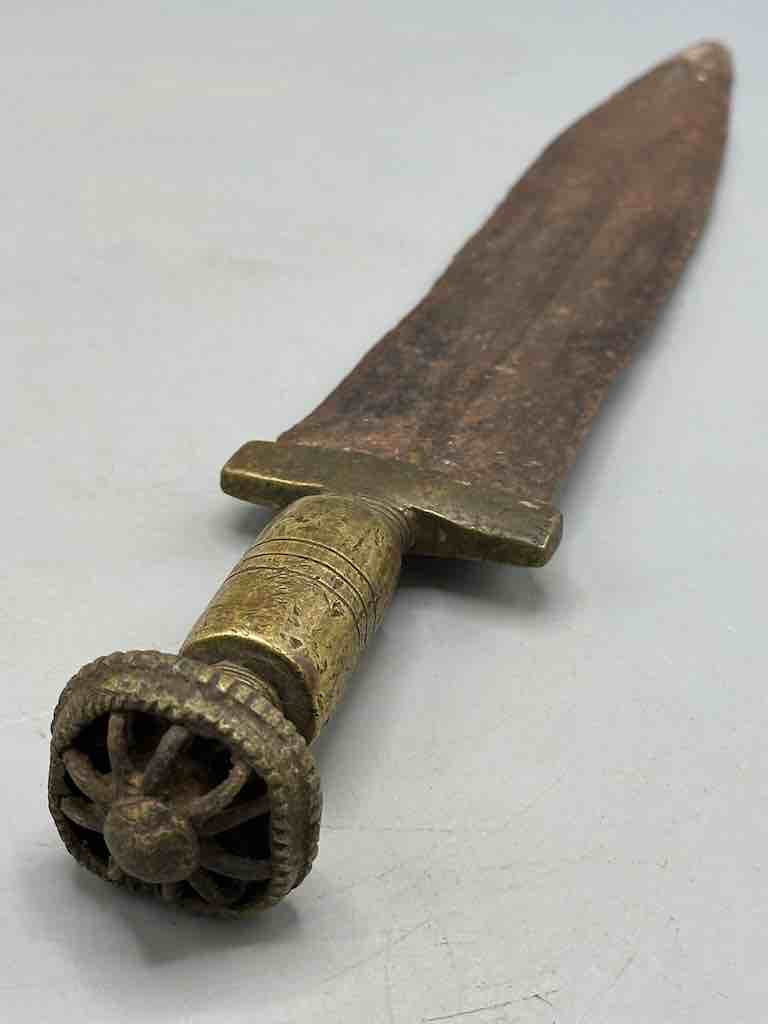
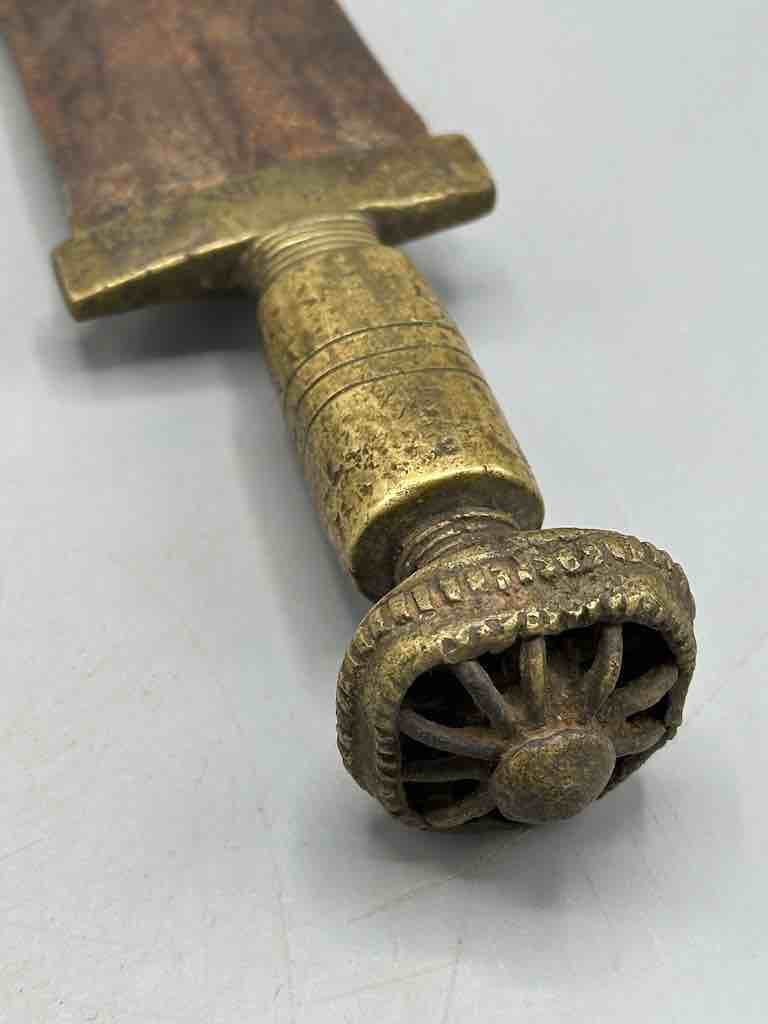
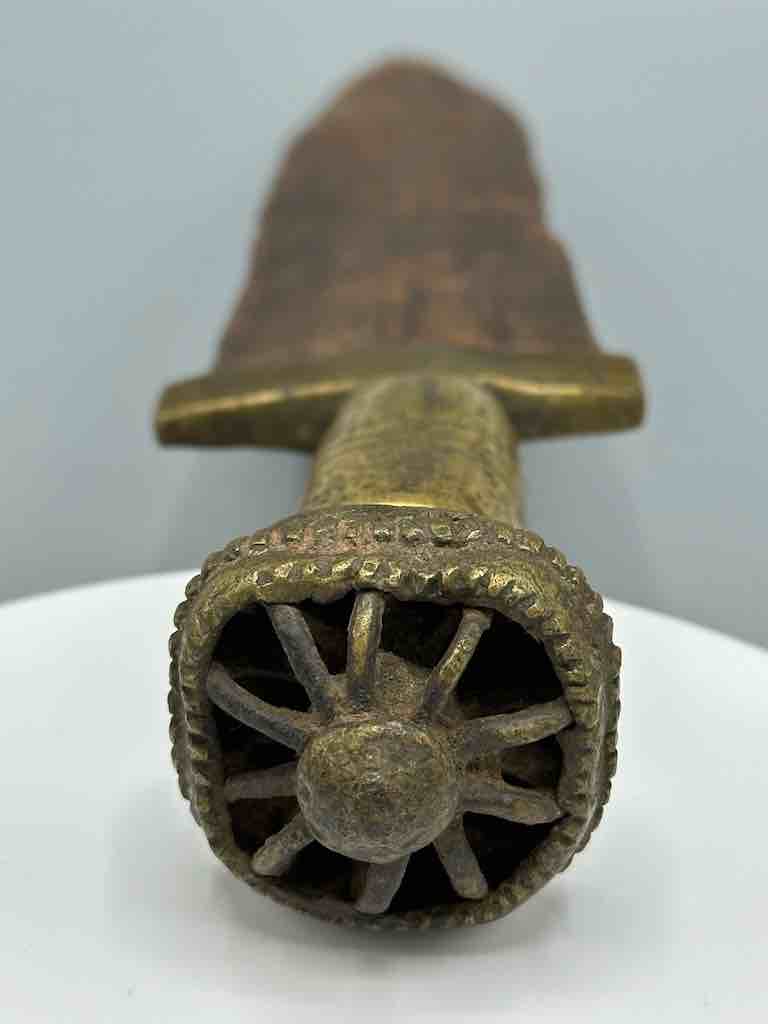
The intricately handcast brass handle is very worn indicating many years of use, as is the iron blade. This is an exceptional object of African traditional artistic expression.
This striking ceremonial knife, crafted with remarkable precision, is a fine example of West African metalwork. The piece features an iron blade of narrow, elongated form, traditionally associated with ritual knives used in high-status ceremonies or by leaders. The brass handle is masterfully cast, adorned with intricate spiral motifs and concentric circles that signify both elegance and power. The decorative pommel at the top of the handle is styled in a way that evokes cultural and spiritual symbolism, suggesting a connection to leadership and authority.
The blade of the knife is forged from iron, with a distinct triangular shape and slight tapering that lends itself more to symbolic use than practical cutting. The brass handle, on the other hand, is indicative of the highly skilled craftsmanship of the maker, incorporating techniques like lost-wax casting that were historically prevalent among the Akan and related cultures.
Cultural and Symbolic Significance:
In the context of Akan culture, ceremonial knives like this one were often used as symbols of leadership, strength, and authority, but also as representations of balance, power, and restraint. Leaders, chiefs, and other high-ranking individuals within the community would carry such objects during important rituals or ceremonies.
This knife likely played a role in spiritual or political rites, symbolizing the wearer’s ability to protect, govern, and maintain the well-being of their people. The decorative nature of the handle and the presence of spirals and geometric designs often relate to proverbial meaning, where the object itself serves as a reminder of societal values such as wisdom, strength tempered with thoughtfulness, and the connection between the leader and the community.
Material and Craftsmanship:
The brass handle is beautifully detailed, with fine engraved motifs that highlight the highly developed metalworking skills of West African artisans. The lost-wax casting technique, in which molten metal is poured into a mold formed around a model, was used to create the ornate handle, showcasing both artistic ability and symbolic expression.
The iron blade has aged beautifully, with a patina that suggests its long-term use as a ceremonial object rather than a working tool. The slight wear on the blade, combined with the pristine condition of the handle, suggests this knife was likely carried as a symbol of power or as part of a leader’s regalia rather than used for daily combat.
Historical Context:
This knife represents a fascinating piece of African history, likely dating from the late 19th century to early 20th century. During this period, the Akan and Ashanti peoples were at the height of their power, and objects such as this ceremonial knife were used not only in everyday life but also during significant ceremonies such as royal processions, ritual offerings, and political gatherings.
In African societies, knives were often more than just weapons — they were symbols of authority, leadership, and the protection of community values. As such, this knife could have been an important object worn by a chief, warrior, or spiritual leader, carrying deep significance in both everyday life and ceremonial contexts.
Condition:
The knife is in good condition with signs of age and wear consistent with its ceremonial use. The brass handle retains a warm, natural patina, adding to its aesthetic appeal. The iron blade has a slight oxidized surface, a testament to its age, but the overall form remains well-preserved. The patina is characteristic of objects that have been cherished for generations, adding depth to its historical importance.
Collector’s Note:
This ceremonial knife is a striking example of African metalwork and is a fine addition to any collection of ethnographic art or African ceremonial objects. The intricate craftsmanship, combined with the profound cultural and symbolic significance, makes this knife a unique piece. It is a representation of the leadership, power, and spirituality that define the Akan and Ashanti peoples.
For collectors interested in African artifacts or symbolic weapons, this knife is an exceptional example of a finely crafted object with both historical and cultural significance. It serves as a reminder of the profound meanings embedded in everyday objects used by African leaders in ceremonial contexts.
13″ overall height (33 cm). Knife 11 1/4 x 2 1/8" (29 x 5 cm)
 English
 繁體中文
繁體中文 Français
 Deutsch
 Italiano
 日本語
日本語 한국어
한국어 Polski
 Русский
 Español